
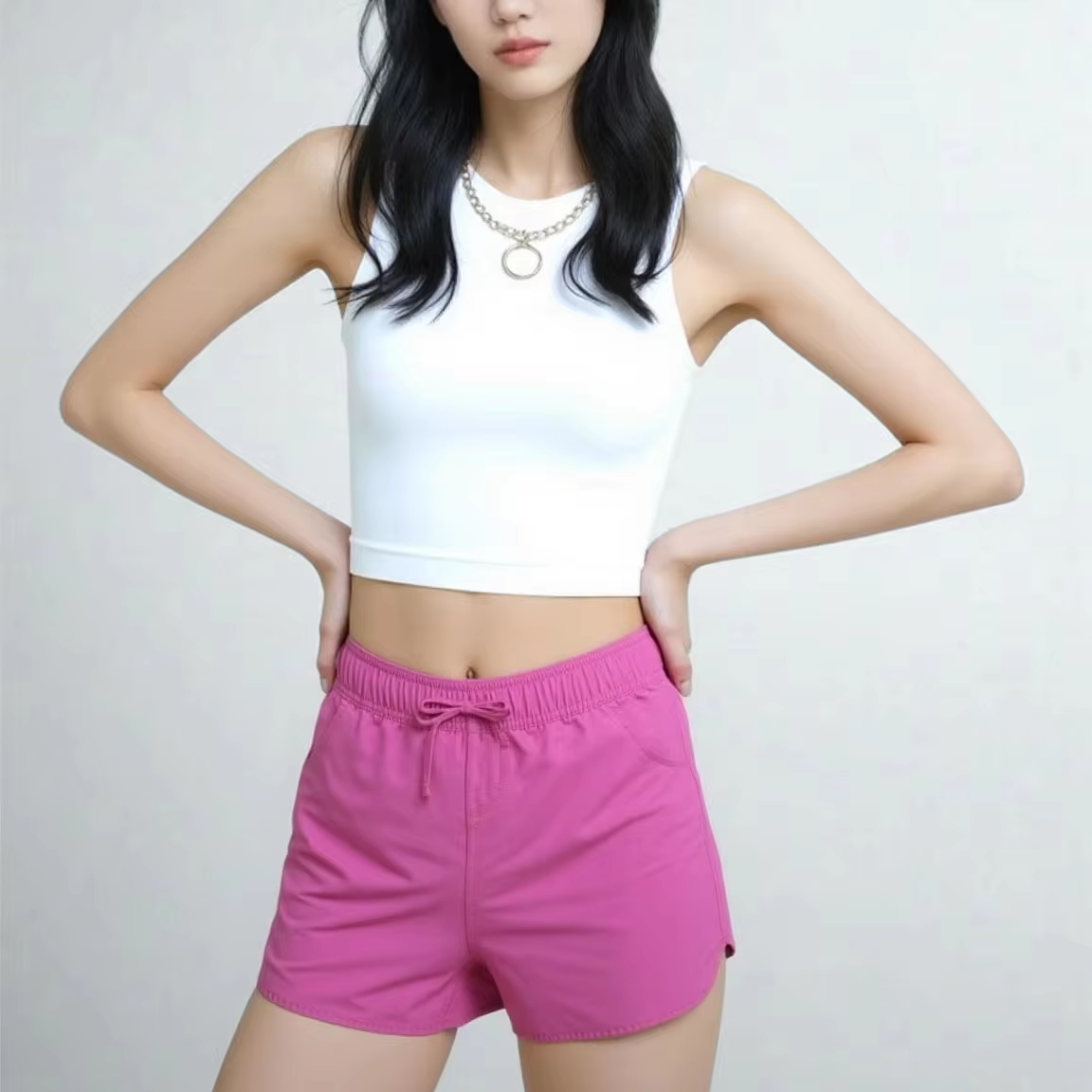
Избор на плат
Изработката на отлични къси панталони за плуване започва с отличен плат, а експертите по текстил са единодушни, че сместа от спандекс и полиестер (или съотношението между двете) е най-важният фактор при оценката на удобството и издръжливостта. Смеси с 15 % до 20 % спандекс осигуряват отлична еластичност и трябва да възстановяват формата си след многократно разтягане — както е при повечето къси панталони. Това помага да се избегне досадният проблем с увисналата тъкан след намокряне на панталоните. Бързоизсъхващи, водонепроницаеми и устойчиви опции са рециклиран полиестер или екологично чисти мрежести платове. Освен това те няма да се лепнат за кожата. Късите панталони от чист памук винаги трябва да се избягват, тъй като абсорбират вода и стават прекалено тежки за всякакви водни спортове. Това ще повлияе негативно върху общото усещане по време на заниманията.
Персонализация и мултикултурна адаптация
Пазарът на бански шорти е разнообразен: има модели с еластична коланка и връвчица за стягане, които са проектирани специално за по-мускулести фигури, тъй като дължината им до коляното покрива бедрата, а връвчицата осигурява адаптивна посадка; също така са налични бански шорти за по-слаби фигури, които се предлагат в по-прилепващи стилове за по-спортен вид и също се предлагат в по-дълги варианти за малко по-голямо покритие; във всички случаи подборът на банските дрехи представлява прецизен баланс между степента на свободна посадка и степента на прилепваща посадка, тъй като прекалено свободните дрехи задържат вода и създават съпротивление, което неизбежно затруднява плавността на движението, а прекалено стегнатите дрехи ограничават плавността на движението; в случаите на персонализация за марката Balle, Yilong използва моделери, които коригират пропорциите на ханша и кръста въз основа на данни за телесните зони, което е получило петзвезден отзив от глобални клиенти благодарение на това, че банските шорти стават културно и регионално адаптируеми към различните етнически групи, телесни размери и етнически вариации на пазара на бански шорти.
Проверка на изработка и детайли
Майсторството при производството на бански къси панталони определя трайното качество на продукта, а опитни инспектори по качеството проверяват едно по едно шевовете, украсите и етикетите. Първата инспекция се отнася до шевовете на промежността и страничните шевове и има за цел да се провери дали шевовете са равни и равномерни. Стандартът в индустрията за бански дрехи за изпълнение на шевовете е трииглен петконечен шев. Тази техника за изпълнение гарантира, че шевовете няма да се разкъсат, когато потребителят извършва дейности с високо ниво на физическо напрежение. След това инспекторите проверяват детайлите на конструкцията. Връвта за стягане не трябва да има никакви изпилени краища, конструкцията на джобовете трябва да е здрава, а всички метални компоненти не трябва да имат остри ръбове. При банските къси панталони за деца трябва да се обърне допълнително внимание за предотвратяване на рискове за безопасност. Това включва избягване на дълги и/или свободно висящи връвчици за стягане, както и премахване на малки, свободно движещи се компоненти. Накрая банските къси панталони трябва да имат регулаторен етикет за продукта, който посочва състава на влакната, инструкции за безопасна употреба и инструкции за перене. Съответствието с международните текстилни регулации е прост индикатор за репутацията на производителя.
Сценарии за плувни шорти
При търсене на плувни шорти стилът и функционалността трябва да са съобразени с целта на шортите. За пътувания до плажа персонализираните дъски за сърфене (board shorts) са идеални — те са свободни, дишат, устойчиви на пясък и водонепроницаеми, което предотвратява проникването на пясък в шортите. За плувни тренировки или спортове, свързани с вода (като например сърфене), по-подходящи са бързоизсъхващи плувни шорти с прилепваща посадка, тъй като намаляват хидродинамичното съпротивление и осигуряват пълна свобода на движение. За разходки по плажа или други дейности могат да се изберат меки шорти за разходка — те са едновременно удобни и модерни. Търговците на едро търсят възможност за персонализация на различни видове плувни шорти според спецификата на отделните пазарни сегменти. Основната цел е да се обединят функционалността на материала и естетиката на дизайна с нуждите на целевата аудитория.
Идентифициране на качеството на плувните шорти
Качеството на бански къси панталони може лесно да се определи чрез няколко прости, практически и бързи теста. Първо, хванете малко парче от платното и го разтегнете няколко пъти. Ако платното се разтегне и остане разтегнато, това е лошо платно. Ако се разтегне и бързо се върне в първоначалното си положение, това е платно от по-високо качество. Второ, проверете цвета на платното. Избършете мокро парче от платното с БЯЛ кърпичка. Ако цветът се прехвърли върху кърпичката, това е лоша устойчивост на боите. Такава лоша устойчивост на боите е причината платното да оцветява кожата и дрехите на човека. След това помирисайте платното. Ако е от ниско качество, то ще мирише на химикали. Ако е от високо качество, химикалите, използвани за боядисването му, ще имат неостър мирис и няма да са признак за замърсяване на околната среда. Платната с международни сертификати като WRAP също са платна от добро качество.
Доставъчна верига и персонализирана услуга
За търговци на едро и собственици на марки първата стъпка при поръчването на къси панталони за плуване е да намерят производител и доставчик на платове с пълна верига за доставка и възможности за персонализирани платове, включително разработка на пробни образци и серийно производство. Например, Yilong разполага с пълен вътрешен екип, състоящ се от производители на пробни образци, производители на леки модели и инженери по производство. Компанията също произвежда интелигентно производствено оборудване, за да гарантира постоянство в качеството на продуктите и гъвкаво да осъществява персонализирани размери и цветове при нисък минимален обем на поръчката (MOQ). Освен това прилага строг контрол на качеството (QC) и извършва многократни проверки преди опаковане и изпращане. Цикълът на доставка за пробни образци и мащабно производство е по-малко от 10 дни, което подобрява персонализацията на марката и общата ефективност на веригата за доставка. Следователно Yilong е спечелила доверието на международните клиенти в областта на бански костюми благодарение на своята комплексна производствена база и международни сертификати за качество.